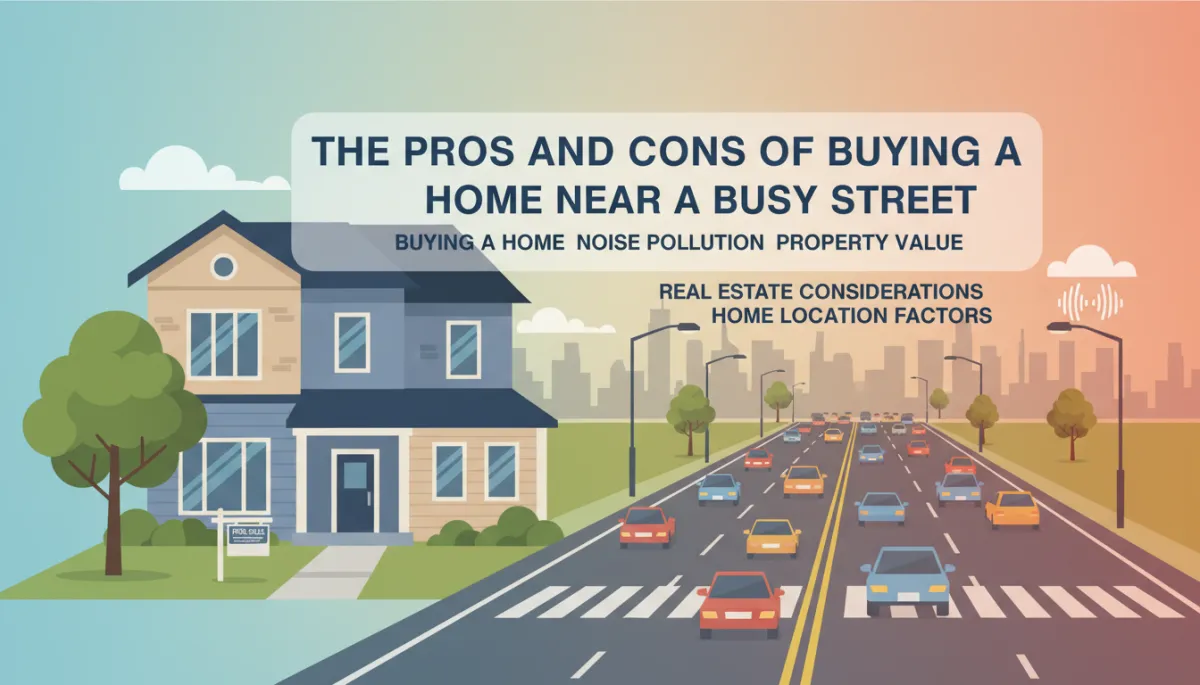
Pros & Cons of Homes Near Busy Streets
Real Estate, Buying A Home, Home Location Factors
The Pros and Cons of Buying a Home Near a Busy Street
Choosing the right location is one of the most important real estate considerations when buying a home. A common dilemma for buyers is whether to purchase a property close to a busy street. While the idea might raise concerns about noise pollution and traffic, there can also be surprising benefits. Understanding both sides will help you make a confident, informed decision.
Why Location Matters So Much When Buying a Home
When people think about buying a home, they often focus on floor plans, finishes, and price. Yet, home location factors can have a bigger impact on your daily life and long-term satisfaction than any countertop material. A busy street is one of those location features that can’t be changed later. You can remodel a kitchen, but you can’t move the road.
From commute times and school access to safety and future resale, your address shapes how you live. That’s why real estate professionals constantly repeat the mantra: “location, location, location.” A home near a busy road sits at the intersection of convenience and compromise, and your personal priorities will determine whether it’s a smart choice or a deal-breaker.
Busy Street Pros: The Hidden Advantages of High-Traffic Locations
Living near a main road isn’t all negative. In fact, there are several busy street pros that appeal to many buyers, especially in urban and close-in suburban areas. Understanding these benefits helps balance the conversation around real estate considerations instead of dismissing a home just because of traffic out front.
Better access and shorter commutes: Busy streets are often main arteries that connect key parts of a city. Living on or near one can mean faster access to highways, business districts, and transit hubs—an important factor if you value convenience or have a long daily commute when buying a home.
Walkability and nearby amenities: Homes on busier roads are frequently closer to shops, cafes, schools, parks, and public transportation. For many buyers, being able to walk to everyday essentials outweighs the downside of extra traffic noise.
Lower purchase price for more house: One of the biggest advantages in terms of property value is that homes on busy streets often sell at a discount compared with similar properties on quieter blocks. If your budget is tight, that discount can allow you to buy a larger home, a better school district, or a more desirable neighborhood than you could otherwise afford.
Potential for future commercial or mixed use: In some markets, properties on main roads can become attractive for home-based businesses, professional offices, or mixed-use zoning over time. While this isn’t guaranteed, it can provide flexibility or future upside for investors who think strategically about long-term real estate considerations.
💡 Pro Tip: If you’re open to a busier street, compare the price difference to similar homes on quieter roads nearby. That gap is part of the “built-in discount” you’re receiving for accepting traffic and noise.
The Downsides: Noise Pollution, Safety, and Everyday Comfort
The most obvious trade-off of a high-traffic location is noise pollution. Cars, trucks, delivery vehicles, and emergency sirens can create a constant background hum—or outright roar—depending on the volume and speed of traffic. For light sleepers, work-from-home professionals, or anyone who values peace and quiet, this can be a serious quality-of-life issue when buying a home near a main road.
Sound and vibration: Traffic noise isn’t just loud; it can be persistent. Larger vehicles may cause vibrations, and motorcycles or modified cars can create sudden spikes in noise that disrupt conversations, naps, or meetings. Over time, chronic noise pollution has been linked to increased stress and poorer sleep quality.
Safety concerns for children and pets: One of the key home location factors for families is safety. A busy street means more vehicles, higher speeds, and potentially more aggressive driving. If you have small children or pets, you’ll need extra vigilance, fencing, and rules about playing near the front yard or driveway.
Air quality and dust: Heavy traffic can also affect air quality. Exhaust fumes and fine particles may be more noticeable near major roads, especially if trucks frequently pass by. Windowsills, porches, and outdoor furniture might collect dust more quickly, adding to your maintenance routine.
Reduced privacy and curb appeal: With more cars and pedestrians passing by, front yards feel less private. Some buyers dislike the idea of people constantly driving past their living room windows or front porch, which can impact how much they enjoy outdoor spaces and how they perceive the home’s charm.

Upgraded windows and thoughtful landscaping can significantly reduce traffic noise indoors.
How a Busy Street Affects Property Value and Resale
From an investment perspective, property value is central to any decision about buying a home. A busy street can influence both what you pay now and what you can expect when it’s time to sell. Typically, similar homes on quieter interior streets command a premium, while those on main roads sell for less. That discount can range from modest to significant, depending on how intense the traffic is and how desirable the surrounding neighborhood may be.
On the positive side, that lower price point can make the home more accessible to entry-level buyers or investors. On the downside, when you go to resell, you may face a smaller pool of interested buyers and longer time on the market. Many shoppers filter out busy streets from their search entirely, so your listing has to compete on other strengths—such as updated interiors, extra square footage, or exceptional school zones—to overcome the location stigma.
📌 Key Takeaway: A home on a busy road often costs less up front but may also appreciate more slowly and take longer to sell. Weigh the savings today against your long-term flexibility and exit strategy.
Practical Real Estate Considerations Before You Commit
If you’re seriously considering buying a home near a busy street, go beyond the listing photos and think like a real estate professional. There are several practical steps you can take to evaluate whether the trade-offs fit your lifestyle and priorities.
Visit at different times of day. Traffic patterns change. A street that seems calm at midday during a showing might be much louder during rush hour, school drop-off, or weekend evenings. Visit morning, afternoon, and night to get a realistic sense of noise pollution and congestion.
Stand inside with windows open and closed. Step into bedrooms, living areas, and home offices. Listen with the windows open, then closed, and pay attention to how much sound penetrates. Check whether the home has double- or triple-pane windows, solid-core doors, and proper insulation—key defenses against road noise.
Assess the layout and outdoor spaces. Floor plans matter. Bedrooms placed at the back of the house, away from the street, can dramatically reduce the impact of traffic. Fenced backyards, tall hedges, and strategic landscaping can also buffer sound and add privacy, improving the overall feel of the property.
Research traffic trends and future plans. Look into city planning documents, proposed developments, or road expansion projects. A street that’s busy today could become even more congested—or, in some cases, be improved with traffic calming measures or new transit options that change the character of the area.
Compare insurance and maintenance implications. Ask your agent and insurance provider whether the location affects premiums or risk factors, such as accident frequency near your driveway. Factor in additional maintenance, like more frequent window cleaning or fence repairs, into your long-term budget.
Matching the Location to Your Lifestyle and Priorities
Ultimately, whether a busy street is a deal-maker or deal-breaker depends on who you are and how you live. For some buyers, the convenience of quick access, public transportation, and nearby amenities outweighs concerns about traffic. For others, especially those who crave quiet or have young children, the constant motion and noise become a daily frustration.
Start by ranking your non-negotiables. Is silence at night more important than a short commute? Would you trade a larger home on a busy road for a smaller one on a cul-de-sac? How long do you realistically plan to stay, and how important is resale flexibility to your financial goals? These questions anchor your decision in personal values rather than abstract real estate rules.
Final Thoughts: A Balanced Approach to Busy Street Homes
Buying a home is rarely about finding perfection; it’s about choosing the right set of trade-offs. Properties near busy streets clearly come with drawbacks—most notably noise pollution, safety concerns, and potential challenges for future resale. At the same time, they offer real advantages: more affordable entry into desirable neighborhoods, shorter commutes, and greater access to everyday conveniences.
By carefully weighing busy street pros and cons, examining property value trends, and considering key home location factors, you can decide whether this type of setting fits your lifestyle and financial plans. Work closely with a knowledgeable real estate agent, take your time evaluating the neighborhood at different hours, and be honest about what you can—and cannot—live with. With a clear-eyed approach to these real estate considerations, you’ll be far more likely to find a home that serves you well today and supports your goals for tomorrow.