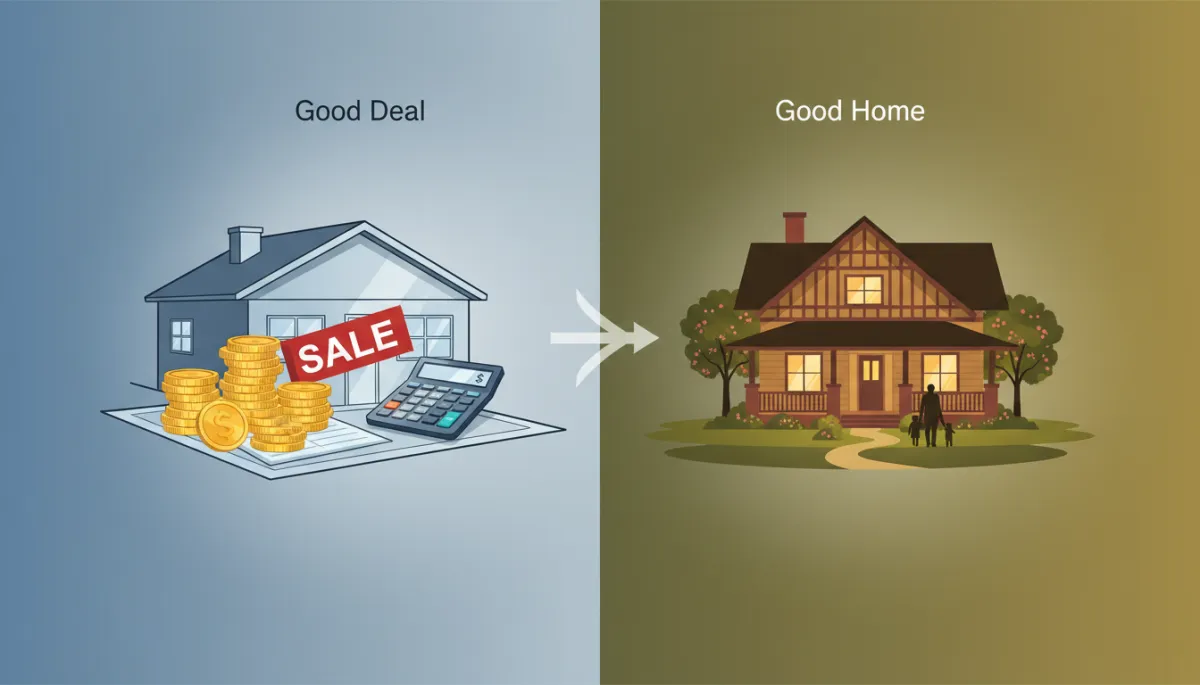
Good Deal vs Good Home: Avoid Real Estate Traps
Real Estate, Home Buying Tips, Property Value
The Difference Between a Good Deal and a Good Home: How Buyers Can Avoid the Trap
In a fast-moving market, it’s easy to get swept away by what looks like a good deal—a low price, a fresh renovation, or a listing that seems “too good to miss.” But in real estate, a good deal and a good home are not always the same thing. Understanding that difference is one of the most important home buying tips for any buyer who wants to protect their sanity, lifestyle, and long‑term property value.
What Is a “Good Deal” in Real Estate?
When buyers talk about a good deal, they usually mean one thing: price. Maybe the home is listed below comparable sales, the seller is offering incentives, or the property has been sitting on the market and looks negotiable. On paper, it checks the box for “value for money.”
From a purely financial perspective, a good deal might include:
Buying below recent sales in the area or below appraised property value
Securing favorable terms, like seller credits or closing cost assistance
Choosing a property with strong rental potential as an investment home
These are all valid goals, especially if you are focused on building wealth or purchasing a future investment home. But price‑driven thinking can blind buyers to a more important question: Is this actually a good home for my life?
What Makes a “Good Home” for a Buyer?
A good home is about more than numbers. It supports your daily routines, fits your stage of life, and feels right when you walk through the door. While a good deal focuses on the transaction, a good home focuses on your quality of life and long‑term satisfaction with the purchase.
Location that works for you: Commute time, access to schools, parks, shops, and the overall neighborhood feel matter more than a slightly lower price across town.
Layout and livability: The number of bedrooms, storage, natural light, and how the space flows affect your everyday comfort in ways a spreadsheet can’t capture.
Condition and maintenance: A slightly cheaper home that needs constant repairs is rarely a true bargain.
The best real estate advice blends both perspectives: you want a home that is financially sound and personally suitable. When those two align, you’ve found something far more valuable than a simple “deal.”
Common Buyer Mistakes: When a Good Deal Becomes a Bad Home
Many buyers learn this lesson the hard way. They chase a bargain and end up compromising on essentials that matter far more in the long run. Some of the most frequent buyer mistakes include:
Ignoring location for price: Choosing a cheaper neighborhood without researching safety, future development plans, or school quality can hurt both your lifestyle and future resale property value.
Overlooking hidden costs: Older roofs, outdated electrical systems, or deferred maintenance can turn a “discount” property into a money pit over the next five to ten years.
Falling for cosmetic upgrades: Fresh paint and new countertops can distract from poor layout, small bedrooms, or lack of storage that no quick renovation can fix.
Forgetting future needs: A compact condo might feel like a bargain now, but if you plan to start a family or work from home, you may quickly outgrow it.
💡 Pro Tip: When you’re tempted by a low price, ask yourself, “Would I still want this home at the same price as others in the area?” If the answer is no, it’s probably not the right fit.
Home Buying Tips: How to Avoid the “Good Deal” Trap
So how can buyers avoid getting trapped by a deal that looks great on paper but feels wrong in real life? These practical home buying tips can help you stay grounded and focused on what truly matters.
1. Start With Lifestyle, Not Listings
Before you fall in love with a particular property, write down how you actually live. How long are you willing to commute? Do you entertain often? Do you need a yard for pets, or quiet space for remote work? Rank your non‑negotiables and nice‑to‑haves. This simple exercise keeps you from compromising on essentials just because a home is priced attractively.
2. Balance Emotion With Numbers
Emotion plays a natural role in choosing a home, but it should be guided by data. Review recent comparable sales, estimated repair costs, and projected appreciation for the area. This is where solid real estate advice from a trusted agent or advisor becomes invaluable. They can help you see whether a “good home” is also a fair financial decision, or whether you’re overpaying because it tugs at your heartstrings.
3. Look Beyond the First Year
Many buyer mistakes come from thinking only about the first 12 months. Ask yourself how this home will work for you three to five years from now. Will your job, family size, or lifestyle likely change? A home that stretches a bit today but still fits your future plans may be far wiser than a cheap property you’ll outgrow quickly.
4. Protect Yourself With Inspections and Due Diligence
Never skip a professional inspection to “save money” or win a bidding war. A thorough inspection can reveal structural issues, water damage, or aging systems that dramatically affect both livability and long‑term costs. What looks like a good deal can quickly unravel once you factor in a new roof, foundation repair, or outdated plumbing.

A thorough inspection often reveals costs that turn a bargain into a burden.
5. Understand the Difference Between a Home and an Investment Home
If you’re buying primarily as an investment home, your priorities may be different: rental demand, cash flow, and long‑term appreciation might matter more than whether you personally love the kitchen. But if you’re buying a primary residence, don’t treat it like a pure investment. Yes, you want to protect property value, but you’ll also be living there every day. The “return” includes your comfort, convenience, and peace of mind.
📌 Key Takeaway: A good deal focuses on price and numbers; a good home balances those numbers with how well the property fits your life and goals.
How Property Value Fits Into the Picture
Property value is more than today’s listing price. It reflects the home’s long‑term potential in its specific location, condition, and market segment. A home that truly suits you is more likely to be cared for, improved thoughtfully, and held long enough to benefit from appreciation. That, in turn, supports your financial picture just as much as snagging a discount at closing.
Homes in stable or improving neighborhoods tend to hold or increase value, even if they cost slightly more upfront.
Functional layouts and timeless features appeal to future buyers and tenants, boosting resale or rental potential.
Thoughtful upgrades—energy‑efficient windows, modern kitchens, updated bathrooms—often provide a stronger return than chasing the lowest purchase price.
Bringing It All Together: Your Personal Definition of a Good Home
In the end, the real difference between a good deal and a good home comes down to alignment. A truly successful purchase aligns your budget, your lifestyle, and your long‑term plans. It may not be the absolute cheapest home you could buy, but it will feel right when you walk in the door and still make sense years from now when you look back at your decision.
As you search, keep returning to these core home buying tips: know your non‑negotiables, think long term, do your homework on property value, and seek honest real estate advice. Most importantly, remember that your goal isn’t just to “win” a negotiation—it’s to choose a place where your life can actually unfold.
When you approach the process with that mindset, you’re far less likely to fall into the trap of chasing a bargain that doesn’t serve you. Instead, you’ll be positioned to find what every buyer truly wants: a home that feels right, performs well as an asset, and proves to be both a wise purchase and a welcoming place to live.