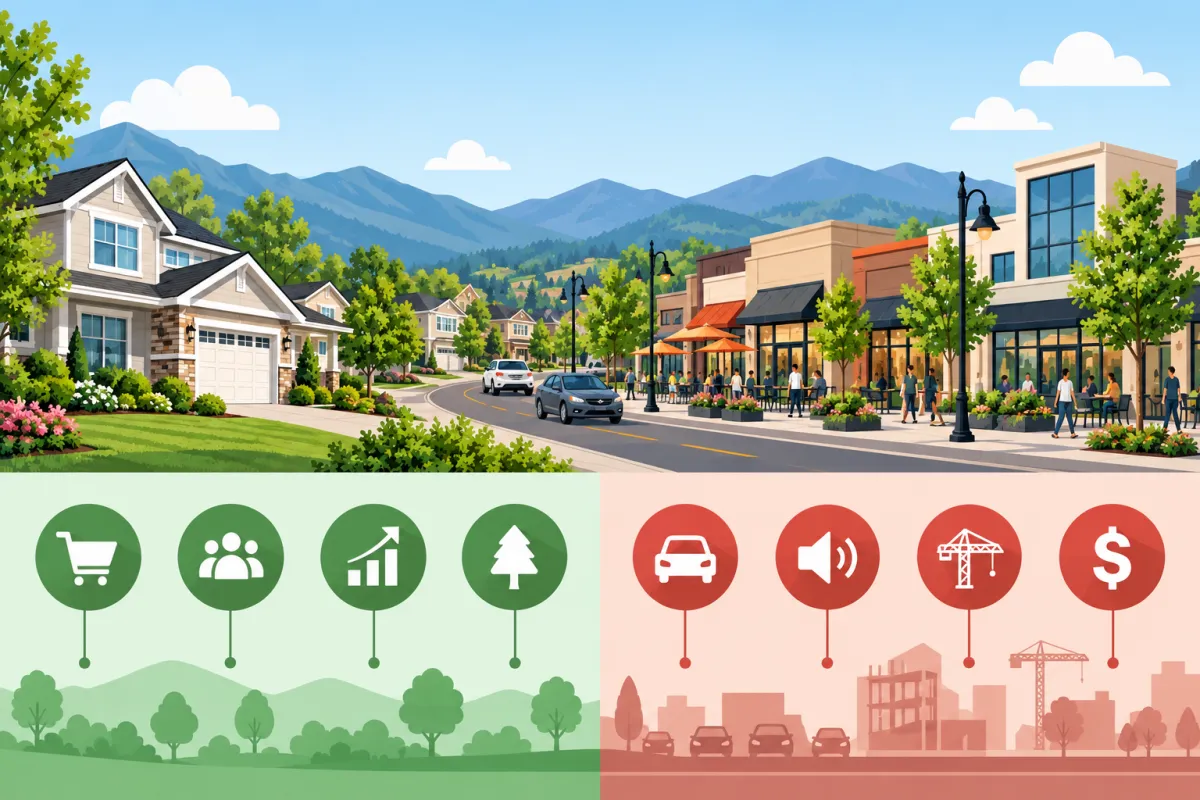
Impact of Commercial Development on Home Value
Real Estate, Home Value, Neighborhood Changes
How Nearby Commercial Development Can Affect Your Home’s Value
New shops, restaurants, and offices can transform a quiet neighborhood almost overnight. But what do these commercial developments really mean for your home value, your day‑to‑day life, and a future property appraisal when you are ready to sell or refinance?
Why Commercial Development Matters for Homeowners
Commercial development refers to projects like shopping centers, office parks, mixed‑use buildings, entertainment venues, grocery stores, and even medical complexes. When these arrive near residential areas, they often bring both opportunities and challenges. The real estate impact can be significant, changing how buyers, appraisers, and lenders see your property almost immediately.
For many buyers, the appeal of living close to local amenities—such as cafés, gyms, and essential services—has grown. Walkability and convenience now rank high on wish lists, and that can push home value upward. At the same time, concerns about traffic, noise, and parking can pull values in the opposite direction. Understanding this balance helps you make more informed decisions about buying, selling, or holding your home when commercial projects are on the horizon.
The Positive Side: Convenience and Desirability Boost Value
In many cases, well‑planned commercial development increases nearby home values. Buyers often pay a premium to live close to everyday conveniences, especially in communities where driving times and fuel costs are real concerns. When new businesses arrive, they can make an area feel more vibrant, complete, and future‑focused—traits that tend to support higher prices and stronger demand.
Improved access to services: Grocery stores, pharmacies, banks, and medical clinics nearby reduce travel time and can be especially attractive to families and older residents.
Lifestyle amenities: Restaurants, coffee shops, fitness centers, and entertainment venues make the neighborhood more enjoyable and can draw in higher‑income buyers.
Job opportunities: Office and mixed‑use developments may bring employers closer to home, cutting commute times and making the area more desirable for professionals.
When demand rises because more people want to live near these new amenities, the real estate impact is often reflected in higher sale prices and quicker time on market. Appraisers look closely at recent comparable sales, so a cluster of strong sales near new commercial hubs can support a higher property appraisal for your home as well.
The Downsides: Noise, Traffic, and Changing Neighborhood Character
Not all commercial development is welcomed with open arms. Some projects can introduce issues that negatively affect home value. Increased traffic, delivery trucks, late‑night activity, and bright lighting can undermine the peaceful feel many buyers want in a residential area. If the development is poorly designed or out of scale with the neighborhood, it may even trigger long‑term resistance from the local market.
Traffic and parking pressure: More visitors can mean congestion, difficulty parking on residential streets, and safety concerns for children and pedestrians.
Noise and operating hours: Late‑night restaurants, bars, or 24‑hour stores can create noise that some buyers will avoid at all costs.
Industrial or heavy commercial uses: Warehouses, auto repair shops, or large logistics centers can bring truck traffic, odors, or visual clutter that pushes values down.
These factors influence buyers’ perceptions and therefore the real estate impact of commercial growth. If a development is seen as disruptive rather than enhancing, your home may appeal to a smaller pool of buyers, which can put downward pressure on price or lengthen the time it takes to sell.
How Appraisers Evaluate Commercial Development Near Your Home
A property appraisal is not based on opinion alone. Licensed appraisers follow specific guidelines and rely heavily on data. When nearby commercial development is part of the picture, they examine how similar homes close to comparable projects have performed in the market. Their goal is to understand whether the development is generally seen as a positive or negative influence on home value.
Appraisers typically consider:
Distance and orientation: A home directly facing a busy parking lot may be affected differently than one a few blocks away, even if both are in the same neighborhood.
Type of businesses: High‑end retail, grocery stores, and medical offices are often viewed more favorably than heavy industrial or late‑night entertainment venues.
Market reaction: Recent sales near similar developments offer clues about whether buyers are paying more, less, or about the same for homes in the area.
If the data show that buyers are willing to pay a premium to live close to these local amenities, your appraisal may reflect a higher home value. If buyers are consistently discounting homes near the development, the appraiser must consider that reality as well. Either way, the presence of commercial projects becomes a measurable part of your overall real estate impact.
Neighborhood Changes: From Quiet Streets to Mixed‑Use Hubs
One of the most important things to recognize is that commercial development rarely affects just one property. It usually signals broader neighborhood changes. New businesses can be the first step toward a more walkable, mixed‑use environment, where residential and commercial spaces blend together in a way that supports long‑term growth and rising values—if it is well managed.
Over time, you may see:
Streetscape improvements such as better lighting, sidewalks, landscaping, and bike lanes that make the area safer and more attractive.
Revitalization of older buildings, turning vacant or underused properties into productive spaces that reduce blight and increase overall appeal.
Shifts in the typical buyer profile, as young professionals, downsizing empty‑nesters, or investors become more interested in the area.
These neighborhood changes shape the story of your community and influence how your home is perceived in the broader market. A once‑sleepy suburb can become a thriving, amenity‑rich district, and that narrative can be a powerful driver of home value when it comes time to sell.
Evaluating a Planned Development Before You Buy or Renovate
If you are considering buying a home near a proposed commercial project—or investing in major renovations to your current property—it pays to do a bit of homework. The more you understand about what is coming, the better you can anticipate the real estate impact on your investment.
💡 Pro Tip: Visit your city or county planning department website to review zoning maps, development applications, and public meeting schedules. This gives you an early look at projects that could influence home value and future property appraisals.
Consider asking these questions:
What types of businesses are planned—retail, office, restaurants, industrial, or a mix?
How will traffic be managed, and are there plans for new roads, signals, or parking structures?
Are there design standards for landscaping, signage, and building height that will help the project blend with existing homes?
Talking with a local real estate agent can also provide insight into how similar developments have affected home value in nearby neighborhoods. They see buyer reactions in real time and can help you interpret whether a particular project is likely to be seen as a coveted local amenity or a potential nuisance.
Steps Homeowners Can Take to Protect and Enhance Value
While you cannot control every aspect of commercial growth around you, you are not powerless. Proactive homeowners often find ways to adapt and even leverage nearby development to support their property’s appeal and future appraisal value.
Highlight the positives: When selling, emphasize walkability, short drives to key services, and favorite neighborhood spots in your listing description and during showings.
Buffer the negatives: Invest in fencing, landscaping, or sound‑reducing windows if traffic or noise increases. These upgrades can make your home more comfortable and attractive to buyers.
Stay engaged locally: Participate in neighborhood associations or planning meetings so your voice is heard when new commercial projects are proposed.
When the time comes for a property appraisal, provide the appraiser with a list of nearby local amenities that residents value, such as parks, trails, cafés, or transit stops. While appraisers must rely on data, a clear picture of how homeowners actually use and appreciate the area can help them understand the full context of your property’s real estate impact.
The Bottom Line: Commercial Growth Can Help or Hurt—Know the Difference
Nearby commercial development is neither automatically good nor automatically bad for your home value. Its true effect depends on the type of businesses, the quality of planning, how well traffic and noise are managed, and how buyers in your area respond to the changes over time. In many communities, well‑designed projects that add useful local amenities and improve walkability have raised values and made neighborhoods more resilient. In others, poorly matched or overly intense uses have created challenges that weigh on prices and property appraisals.
By paying attention to proposed projects, understanding how appraisers and buyers view commercial growth, and taking practical steps to showcase the strengths of your location, you can navigate neighborhood changes with more confidence. Ultimately, the goal is not just to react to development, but to position your home so that it benefits as your community evolves—and to ensure that its true worth is reflected in both the market and every future property appraisal.