
Buying a Home with an Accessory Dwelling Unit
Real Estate, Home Buying Tips, Accessory Dwelling Unit
What to Consider When Buying a Home With an Accessory Dwelling Unit
Buying a home that already includes an Accessory Dwelling Unit (ADU) can be a smart move, combining a place to live with the potential for rental income, multigenerational living, or flexible workspace. At the same time, this type of property comes with unique legal, financial, and practical considerations that every buyer should understand before making an offer.
Understanding What an Accessory Dwelling Unit Really Is
Before you evaluate specific properties, it is important to understand what an Accessory Dwelling Unit actually is. An ADU is a secondary, self-contained residential unit located on the same lot as a primary single-family home. It typically has its own entrance, kitchen, bathroom, and living area, and can be attached (such as a basement or over-garage apartment) or detached (such as a backyard cottage).
Local regulations often refer to these structures by different names: granny flat, in-law suite, casita, carriage house, or secondary suite. For your purposes as a buyer, the label matters less than the legal status. A key early step in your home buying tips checklist is confirming whether the unit is recognized as a legal dwelling under local zoning and building codes, or if it is considered an informal or nonconforming structure. That distinction will affect your ability to rent it out, insure it, and potentially finance the property.
Legal Status, Permits, and Zoning: The Foundation of Smart Real Estate Advice
One of the most important pieces of real estate advice for ADU buyers is to verify the property’s legal status in writing. Never rely solely on verbal assurances that “it has always been rented” or “the city has never had a problem with it.” Instead, work with your real estate agent, attorney, or directly with the local planning department to confirm the following:
Whether the Accessory Dwelling Unit was built with permits and has passed final inspections
Whether the zoning code currently allows an ADU on the lot, and under what conditions (owner-occupancy, size limits, parking, etc.)
Any recorded restrictions, such as deed restrictions or homeowners association (HOA) rules that limit rental activity or short-term stays
A permitted ADU is typically easier to insure, easier to finance, and more valuable at resale. An unpermitted unit may limit your ability to treat the property as an investment property, and in some cases, the local authority could require you to bring it up to code or even remove it. That risk should be clearly factored into your offer price and negotiations.
📌 Key Takeaway: Ask for copies of permits, certificates of occupancy, and zoning confirmations for the Accessory Dwelling Unit, and make your purchase contract contingent on satisfactory verification.
Evaluating ADU Benefits for Your Lifestyle and Long-Term Goals
One of the biggest ADU benefits is flexibility. A well designed Accessory Dwelling Unit can serve many purposes over the life of your ownership: a rental unit that helps offset your mortgage, a private suite for aging parents, a separate space for adult children, or a dedicated home office or studio. As you evaluate whether a specific property is right for you, consider how the ADU aligns with your short-term and long-term plans.
Income potential: If you plan to rent the unit, research local market rents for comparable spaces. Estimate realistic occupancy rates and factor in operating costs such as utilities, maintenance, property management, and vacancy. This will help you understand whether the ADU meaningfully supports your monthly housing costs.
Family needs: If multigenerational living is a priority, evaluate accessibility, privacy, and comfort. Consider whether the layout works for older adults, individuals with mobility limitations, or children moving back home after college.
Work and lifestyle: Many buyers today use an Accessory Dwelling Unit as a professional workspace, studio, or consultation area. Confirm that local regulations allow this type of use, and evaluate whether the space has the right layout, sound isolation, and access arrangements for clients or colleagues.
The most effective home buying tips focus on aligning the property with your broader life plan, not just today’s needs. A flexible ADU can evolve with you, but only if you choose a layout, location, and configuration that can adapt as your circumstances change.
Financial Analysis: Treating the Property Like an Investment Property
Even if you are primarily an owner-occupant, a home with an Accessory Dwelling Unit has characteristics of an investment property. That means you should evaluate it with both personal and investment lenses. Begin by estimating the total cost of ownership: mortgage payments, taxes, insurance, utilities, and ongoing maintenance for both the main home and the ADU. Then, estimate the potential rental income if you plan to lease the unit, and analyze how that income could offset your costs.
A simple framework is to calculate your net operating income (NOI) from the ADU by subtracting operating expenses from gross rent. Next, compare the property’s price to this income stream to understand its implied cap rate or return. While you may not be a professional investor, this type of disciplined analysis can prevent you from overpaying for a property simply because it includes an Accessory Dwelling Unit.
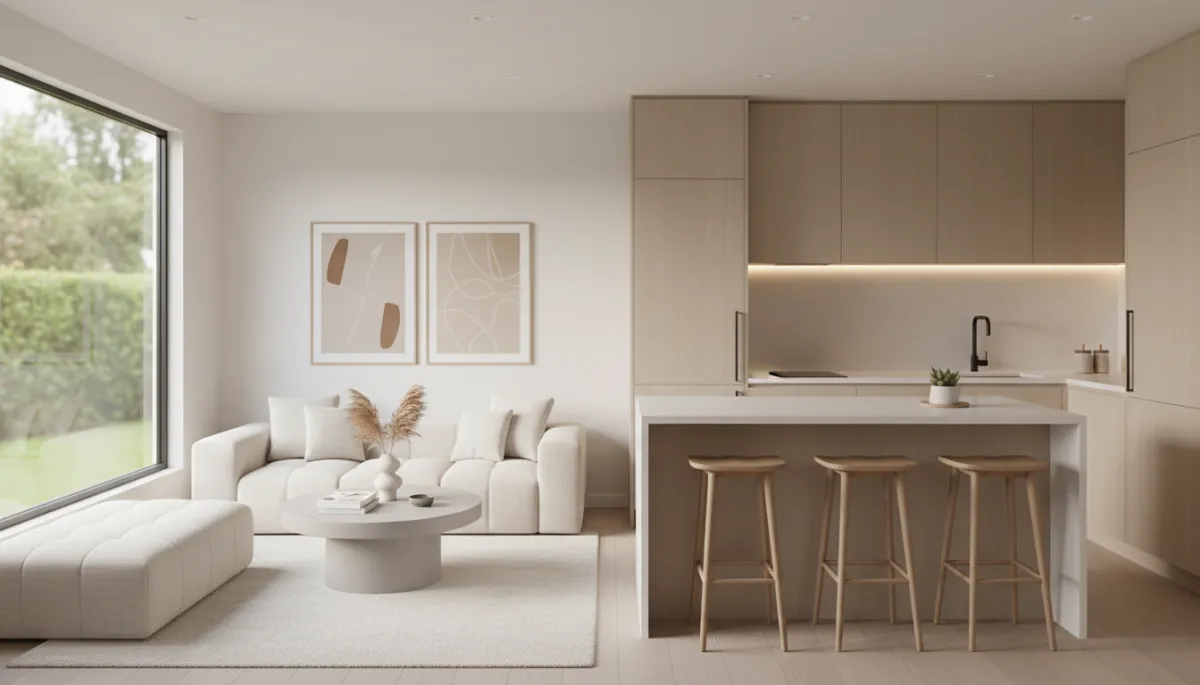
Well-designed ADUs command higher rents and strengthen long-term resale value.
💡 Pro Tip: Ask a local real estate professional or property manager for realistic rent estimates and expense assumptions, and run multiple scenarios (conservative, moderate, optimistic) before you commit.
Home Financing Options for Properties With ADUs
Financing a home with an Accessory Dwelling Unit can be slightly different from a conventional single-family purchase, particularly if you intend to use rental income to help qualify for the loan. Understanding your home financing options early will streamline the buying process and reduce surprises later in underwriting.
Conventional mortgages: Many conventional lenders will finance properties with legal ADUs as primary residences. Some may allow you to use a portion of projected rental income from the unit to help you qualify, provided there is a documented rental history or an appraiser’s market rent analysis. Policies vary, so it is essential to consult with a lender experienced in ADU properties.
FHA and VA loans: Government-backed loans may have specific guidelines for Accessory Dwelling Units. In some cases, ADU rental income can be considered; in others, it may not. These programs can be attractive for buyers with lower down payments, but require careful review of current rules with your loan officer.
Portfolio and local lenders: Some regional banks and credit unions offer specialized products for properties with ADUs, recognizing their growing role in housing markets. These lenders may be more flexible about counting rental income, but may also require larger down payments or charge slightly higher interest rates.
When comparing home financing options, ask each lender how they treat the ADU in their underwriting: Will they recognize it as a separate unit? How much rental income can be used? Are there additional appraisal requirements? Clear answers to these questions will help you select the right loan program and structure your offer accordingly.
Practical Home Buying Tips: Layout, Privacy, and Daily Living
Beyond legal and financial considerations, buying a home with an Accessory Dwelling Unit requires careful attention to how the property will feel to live in day to day. Some of the most valuable home buying tips for ADU properties relate to layout, privacy, and functionality for both you and your potential tenants or guests.
Separate entrances and circulation: Consider how people will move in and out of the ADU. Is there a clearly defined, private entrance, or will occupants need to pass through shared spaces? Separate pathways, parking, and entries reduce friction and enhance privacy for everyone involved.
Sound and visual privacy: Evaluate wall construction, window placement, and outdoor areas. Thin walls or windows facing directly into each other’s living areas can lead to noise and privacy concerns. Look for thoughtful design elements such as fencing, landscaping, or staggered windows that create separation between the main home and the ADU.
Shared utilities and storage: Determine whether the Accessory Dwelling Unit has separate utility meters or shares electricity, gas, and water with the main home. Separate meters make it easier to allocate costs to tenants. Also, consider storage solutions for both units, including secure areas for bicycles, seasonal items, or maintenance equipment.
These seemingly small details significantly impact your quality of life and the attractiveness of the unit to prospective renters. Incorporating them into your decision-making process is a hallmark of thoughtful real estate advice tailored to ADU buyers.
Maintenance, Insurance, and Risk Management for ADU Owners
Owning a home with an Accessory Dwelling Unit means taking responsibility for an additional structure or living space, with corresponding maintenance and risk considerations. When you evaluate a property, assess the age and condition of the ADU’s roof, foundation, plumbing, electrical systems, and appliances separately from the main home. Deferred maintenance in the ADU can quickly erode the ADU benefits you expected from rental income or family use.
Insurance is another critical factor. Not all policies treat Accessory Dwelling Units the same way, especially if you plan to rent the space on a short-term or long-term basis. Speak with your insurance provider about how the ADU will be covered, whether you need a landlord or rental endorsement, and what liability protections are in place. If you are treating the property as an investment property, ensure that your coverage and risk management strategies reflect that reality.
📌 Key Takeaway: Build a maintenance and reserve budget for both the main home and the ADU, and confirm that your insurance policy explicitly addresses the accessory unit and any rental activity.
Regulatory Trends and Future Resale Value
Many regions are actively updating zoning codes to encourage the development and legalization of Accessory Dwelling Units as part of a broader response to housing shortages. Understanding these regulatory trends is an important element of forward-looking real estate advice. In markets where ADUs are increasingly accepted and streamlined, homes with well-designed secondary units often command a premium at resale, especially among buyers who value flexibility and income potential.
However, regulations can also tighten, particularly around short-term rentals. If your strategy depends on vacation or platform-based rentals, research current and proposed rules carefully. A property that functions well as a long-term rental or family suite is typically more resilient to regulatory changes than one that relies solely on short-term guests. When you view the home as both a residence and an investment property, you are more likely to make a decision that holds its value over time.
Pulling It All Together: A Checklist for ADU Home Buyers
When considering a home with an Accessory Dwelling Unit, it can be helpful to work from a structured checklist that combines legal, financial, and practical factors. Use the following points as a guide when touring properties and discussing them with your real estate professional:
Confirm that the ADU is legal, permitted, and recognized by the local jurisdiction and, if applicable, the homeowners association.
Evaluate how the ADU supports your goals: rental income, multigenerational living, work-from-home, or a combination of these ADU benefits.
Analyze the property as an investment property by estimating realistic rental income, expenses, and return metrics, even if you will live there full-time.
Compare home financing options and understand how each lender treats ADU income, appraisals, and underwriting requirements.
Assess layout, privacy, parking, and shared spaces to ensure comfortable daily living for both you and your tenants or guests.
Review maintenance needs, insurance coverage, and risk management plans for the main home and the Accessory Dwelling Unit.
Conclusion: Making a Confident Decision About a Home With an ADU
A home with an Accessory Dwelling Unit offers compelling possibilities: the chance to reduce your monthly housing costs, support family members, work more effectively from home, or build long-term wealth through rental income. At the same time, it requires a more nuanced approach than a standard single-family purchase. By combining clear-eyed financial analysis, careful review of legal status and zoning, and practical attention to layout and lifestyle, you can unlock the full potential of this type of property.
As you move forward, lean on professional real estate advice, including agents, lenders, attorneys, and insurance specialists who understand ADUs. Use structured home buying tips and checklists to keep your evaluation objective, and resist the temptation to overlook red flags simply because the idea of rental income is appealing. When approached thoughtfully, buying a home with an Accessory Dwelling Unit can be a strategic decision that supports your lifestyle today and your financial goals for years to come.